From 48 Hours to 30 Minutes: Reducing Doula Matching Time by 90%+
Company
Iowa Black Doula Collective
Business Type
Social Impact Organization
Team
1 Designer, 3 Developers
Time
4 Months
Problem Statement
Doula collectives lack efficient systems to match families with providers, resulting in response times of 48+ hours. Manual processes create bottlenecks, inconsistent educational material delivery, and limit the collective’s ability to scale and serve more families in their communities.
Solution
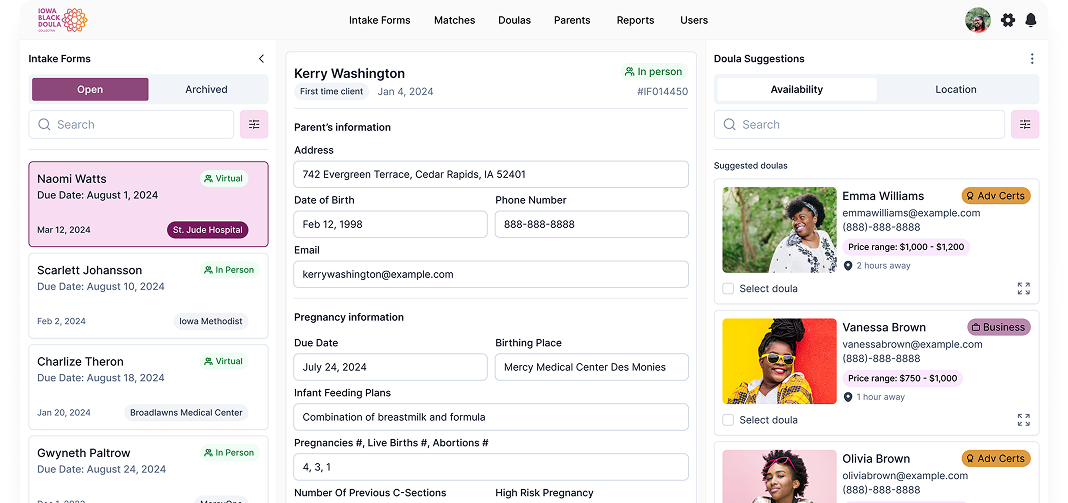
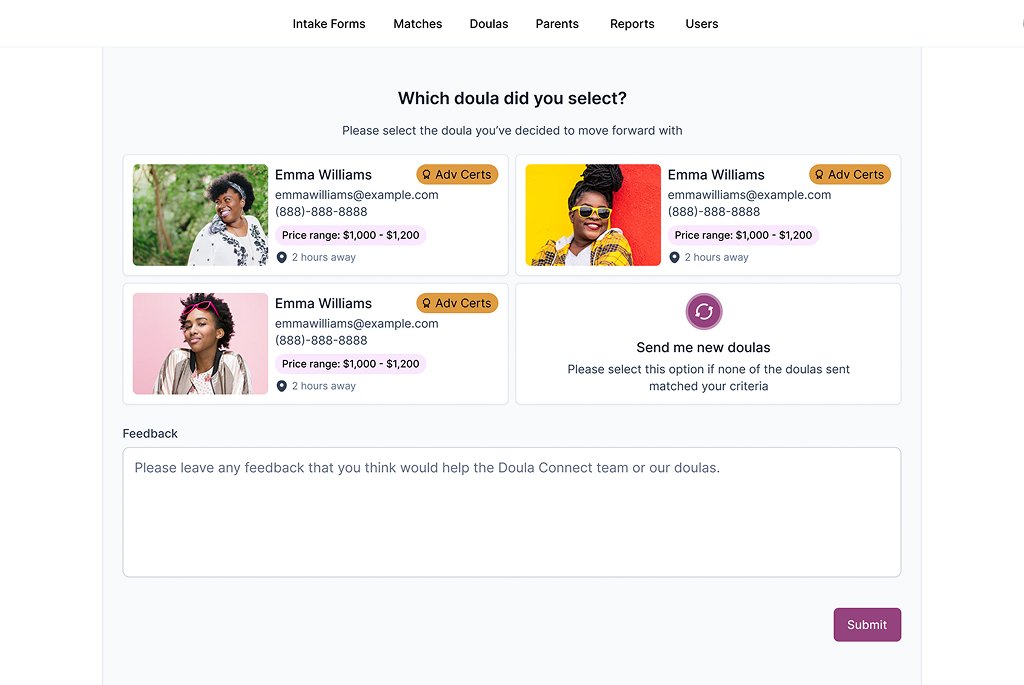
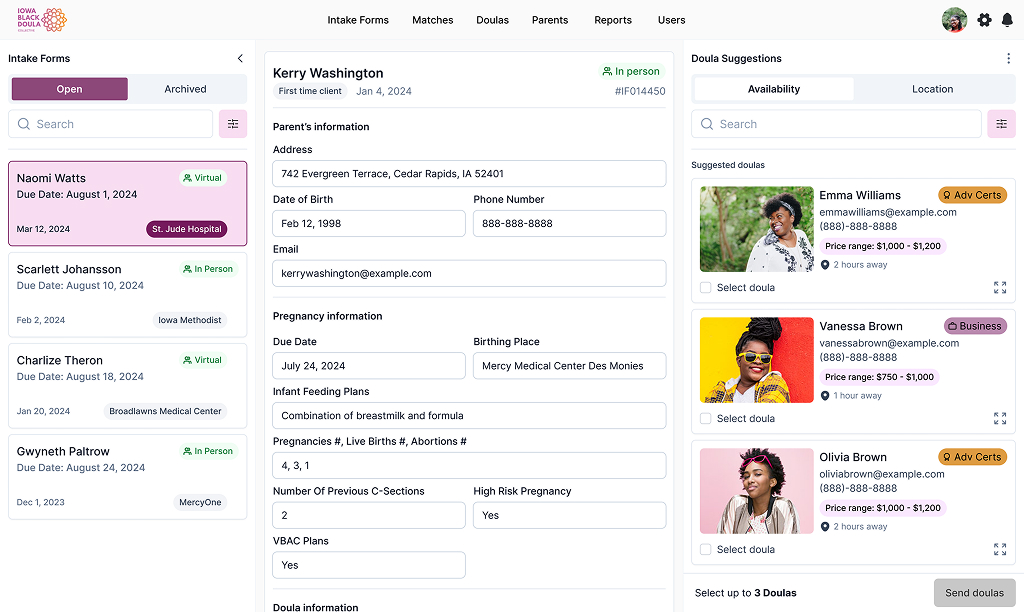
DoulaConnect streamlines service delivery through an intelligent matching system that connects families with suitable doulas in under 30 minutes, while automating educational content distribution and providing doulas with the tools they need to focus on care rather than administration.
Design Process
Goals
The DoulaConnect platform was designed to enhance the Iowa Black Doula Collective’s ability to serve diverse families by streamlining operations and improving service delivery. The primary objectives included:
Reducing doula-family matching time from 48+ hours to under 30 minutes
Automating educational material delivery to ensure consistent access to resources
Enabling the IBDC to scale operations without increasing administrative burden
Creating an intuitive platform for both doulas and families with varying technical expertise
Building a system that respected the IBDC's mission of culturally grounded, evidence-based care
Empowering a non-technical team to manage and evolve the platform independently
Challenge
The development of DoulaConnect came with several challenges, including:
Inconsistent Service Delivery
Reliance on individual doulas to manually distribute educational materials meant no guarantee families received essential information
Manual Matching Process
Pairing doulas with families was time-consuming and inefficient, often taking up to 48 hours or more, leading to delays and potential mismatches
Lack of Technical Infrastructure
The IBDC had no in-house tech team or digital systems to build upon
Team Education
Ensuring non-technical staff understood and could manage the new system
Scaling Constraints
Growing demand for services couldn't be met without significant operational improvements
Preserving Mission
Maintaining the organization's commitment to holistic, culturally responsive care while implementing technology
Research
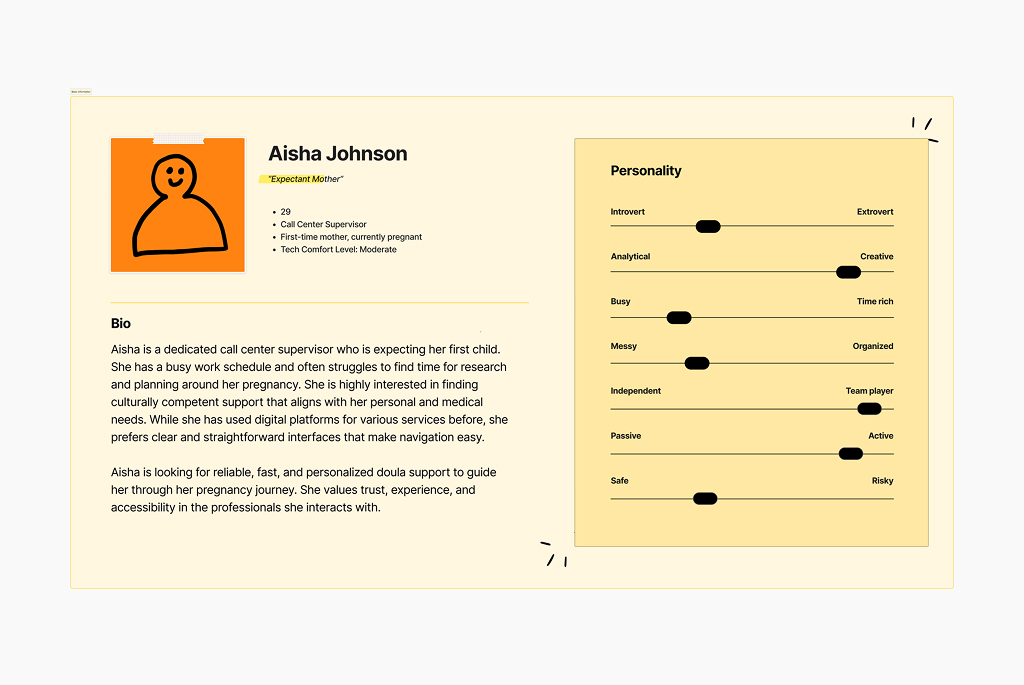
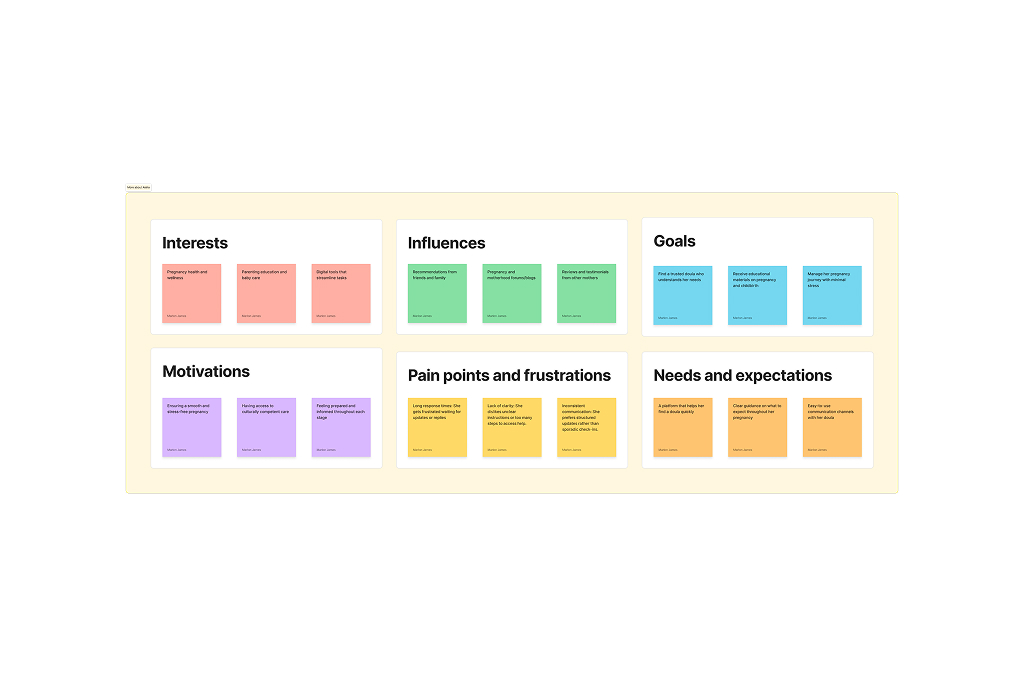
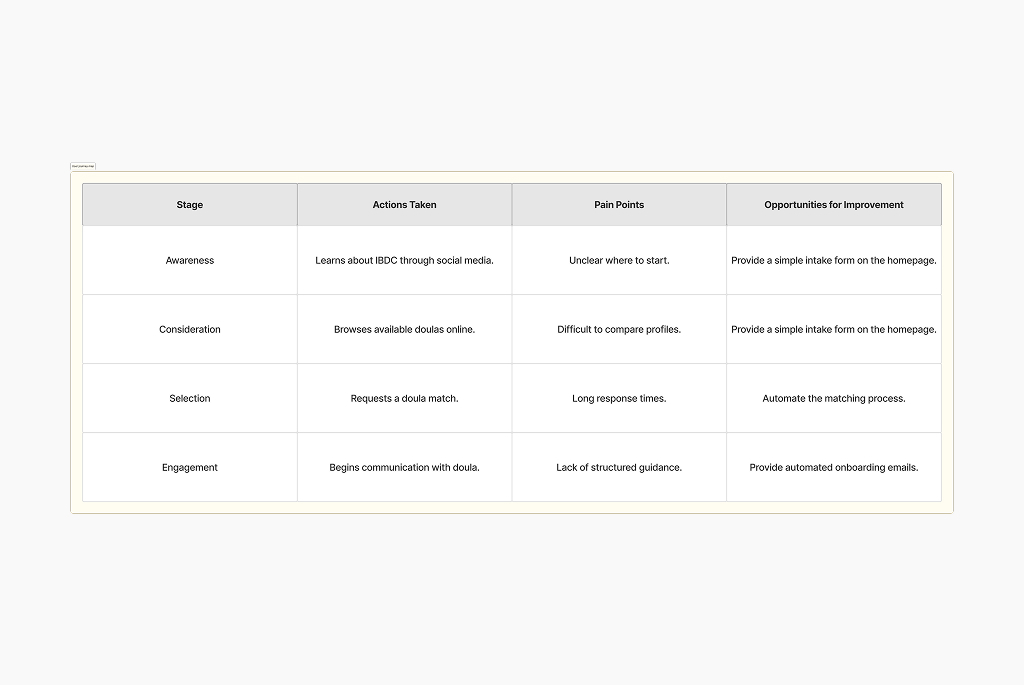
The research and discovery phase focused on understanding the workflows, pain points, and needs of both the IBDC doulas and the families they serve.
Findings
Doulas spend significant time on administrative matching tasks rather than direct care
Families struggle with delays in accessing support during critical pregnancy window
Educational resources are valuable but inconsistently delivered across the collective
The IBDC team needed clear, non-technical explanations to feel confident in technology decisions
Success metrics matter: tracking service efficiency and impact on family outcomes
Prototyping & Wireframing
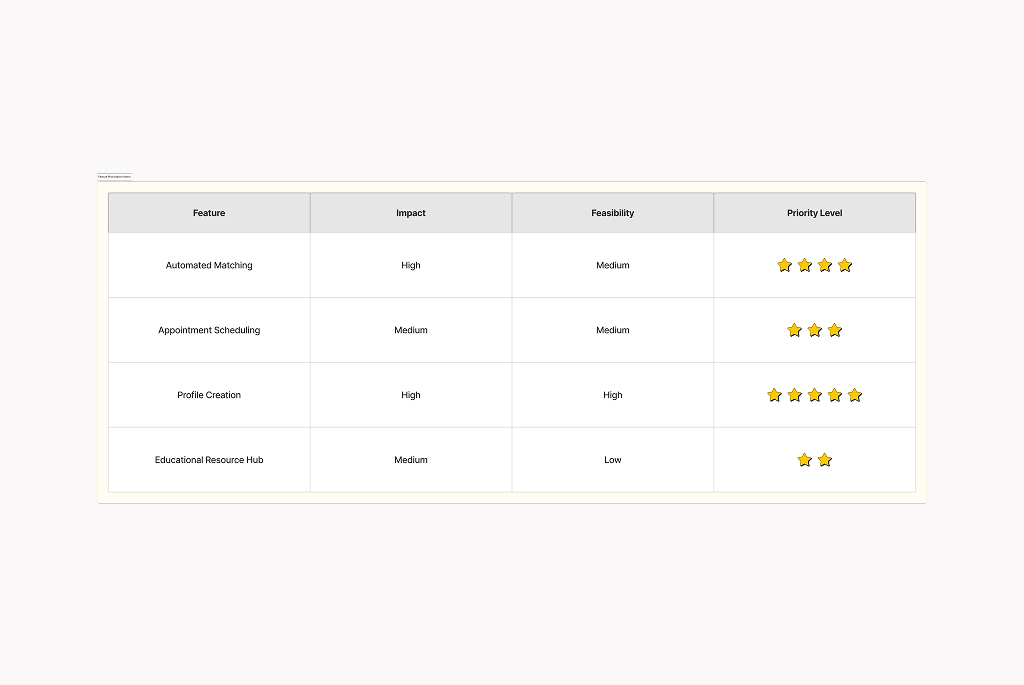
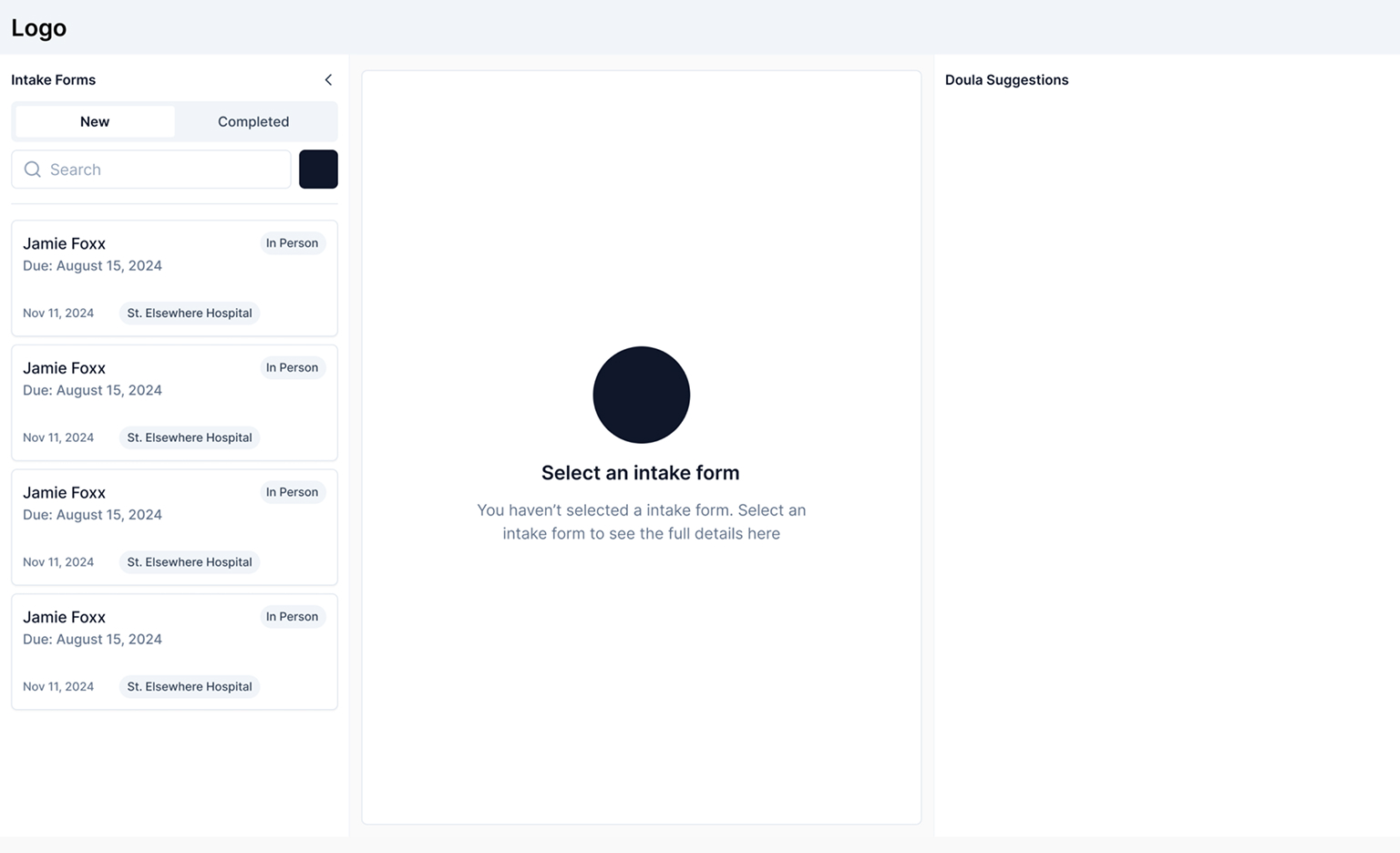
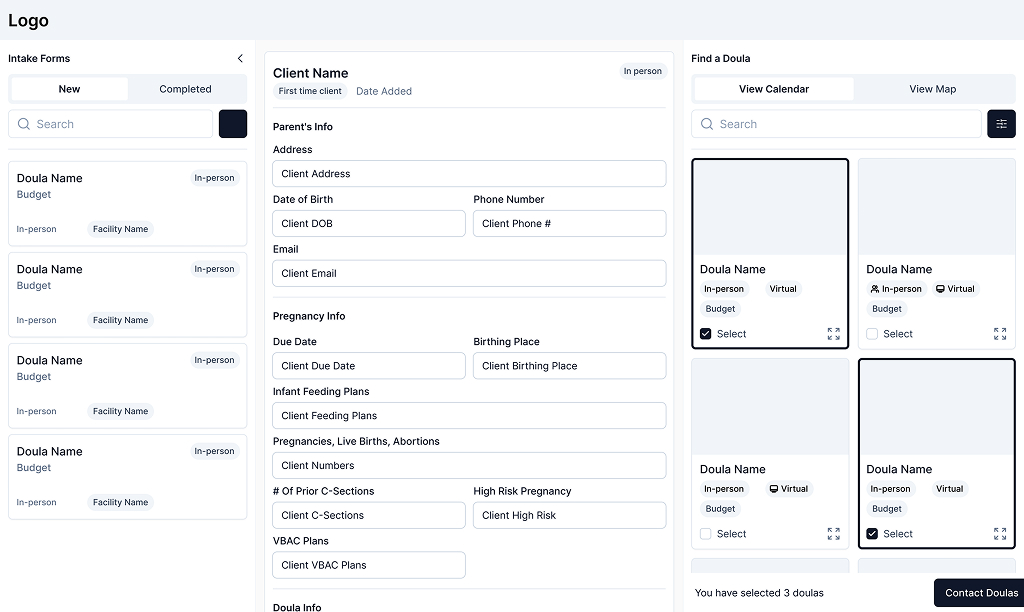
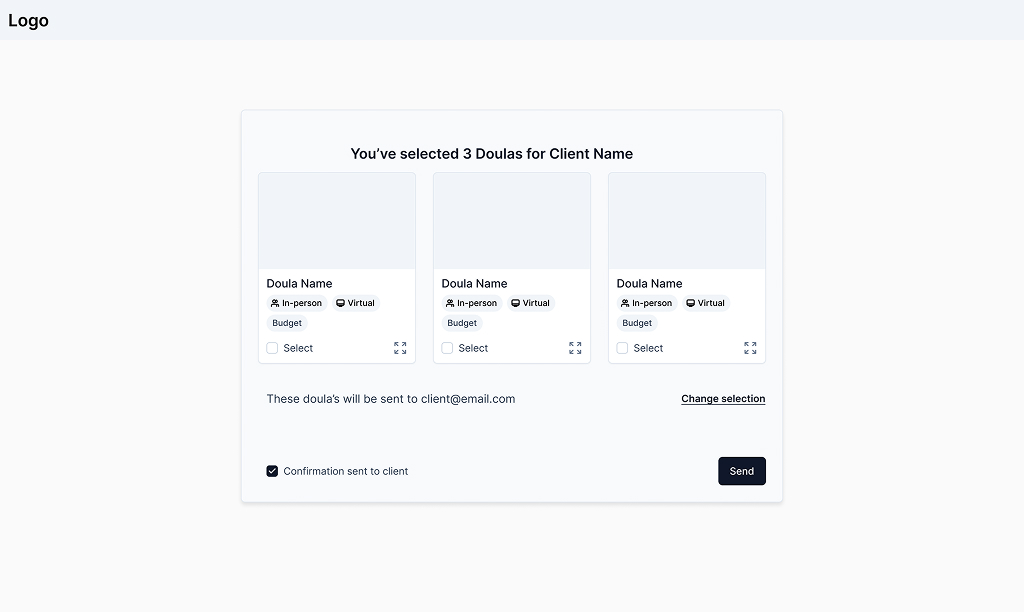
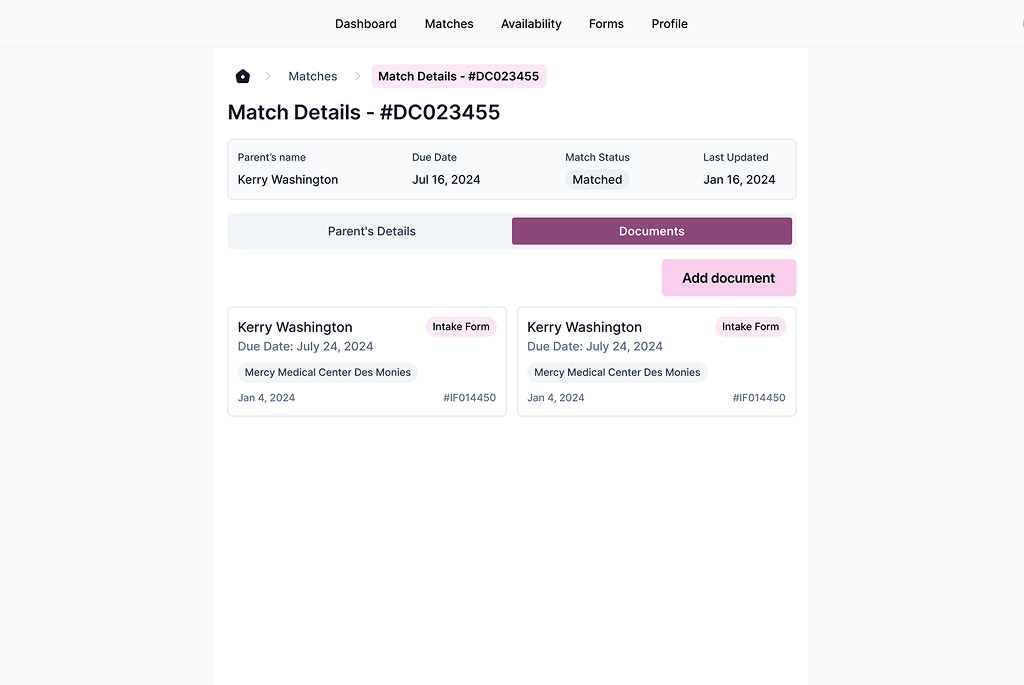
Interactive prototypes were created to simulate the matching workflow, family intake forms, and doula dashboards. Virtual walkthroughs were conducted with the IBDC team and selected users to gather feedback and validate assumptions before development began.
Accessibility Considerations
The design prioritized accessibility for all users:
Intuitive navigation for families with varying technical literacy
Easy-to-read fonts and clear visual hierarchy
Mobile-responsive design to support access from any device
Simple form submission processes to reduce friction
Iterative Process
Working with an Agile methodology and 2-week sprints, the team held bi-weekly meetings with the IBDC to present progress, gather feedback, and make collaborative decisions. Feedback-informed refinements, including:
Simplifying the family intake forms to reduce abandonment
Building training materials to empower the IBDC team
Automating educational content triggers to ensure timely delivery
Enhancing the matching algorithm based on real doula-family preferences
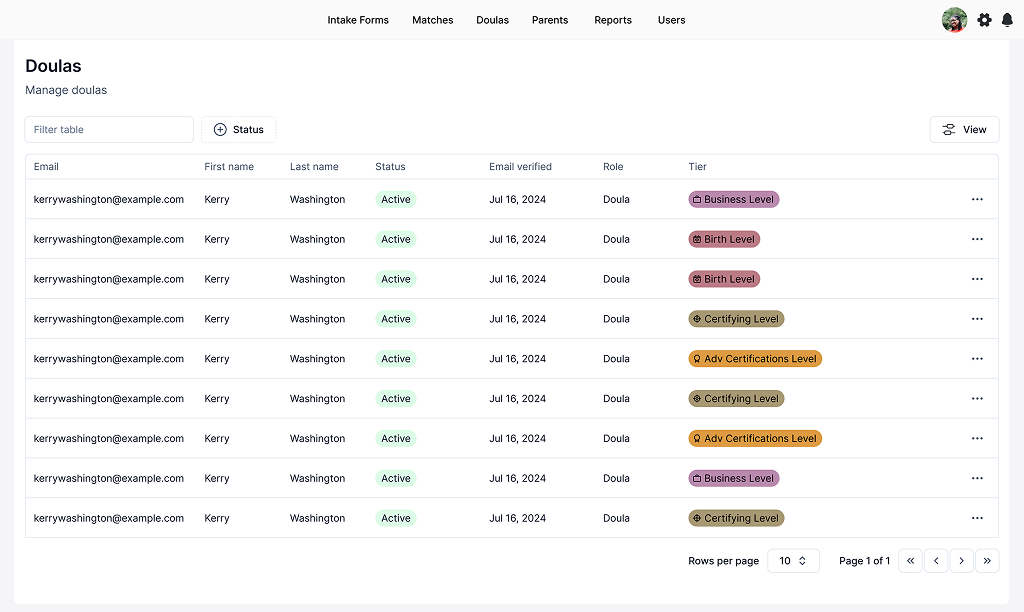
Providing detailed administrative dashboards with actionable insights
Final Design
The final platform provided distinct experiences tailored to three user groups:
Family Features
Simple registration and preference selection
Matching with suitable doulas (under 30 minutes)
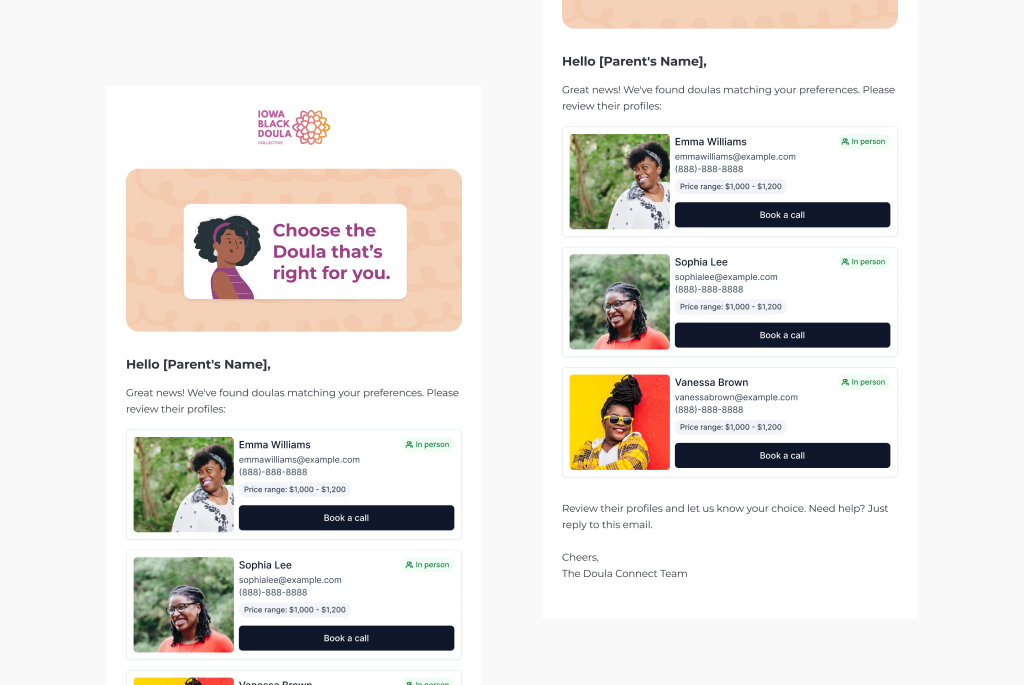
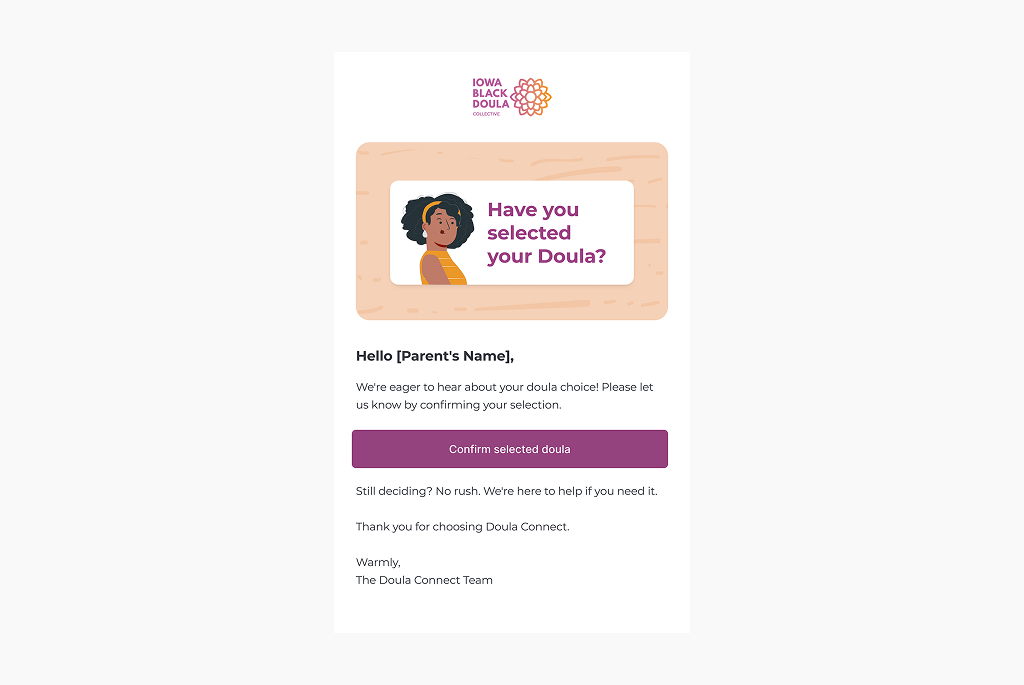
Automated delivery of educational resources via email
Doula Features
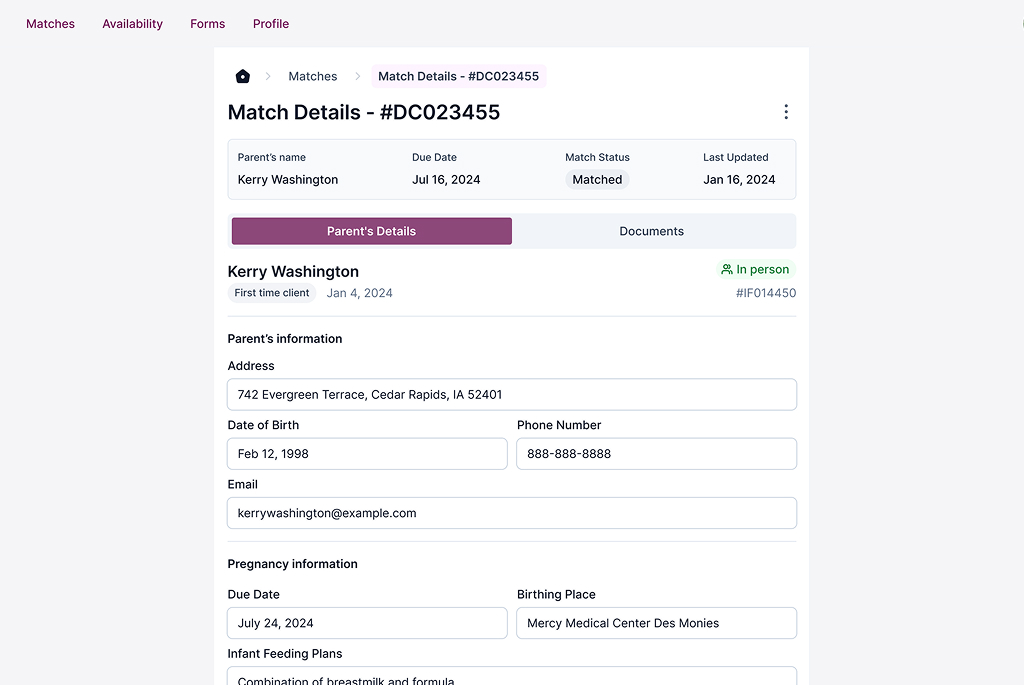
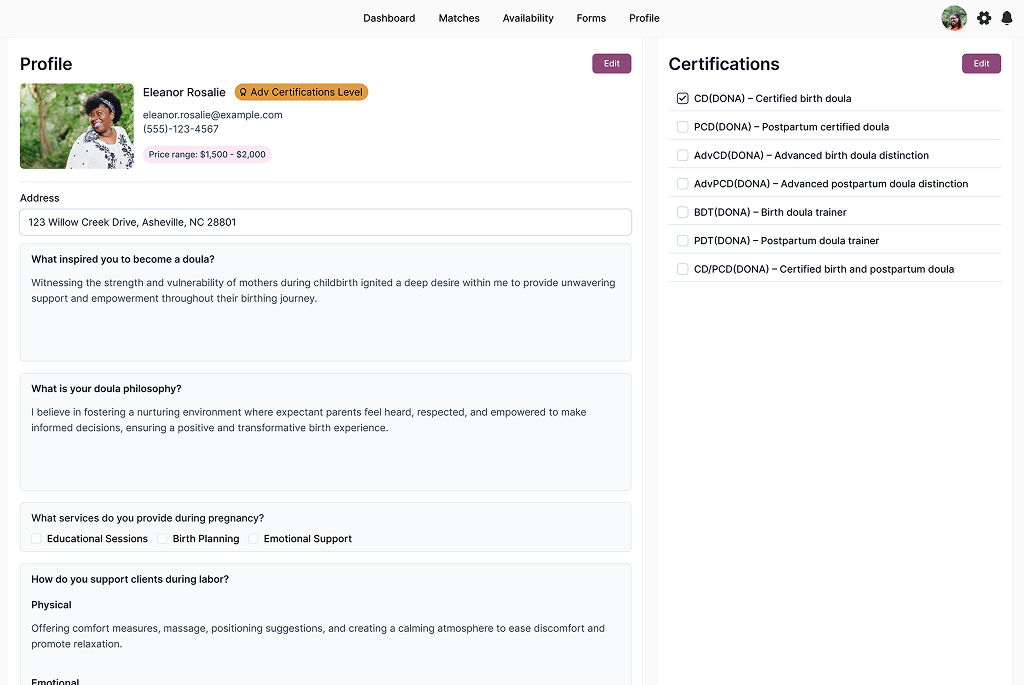
Clear intake information about matched families
Simplified client management dashboard
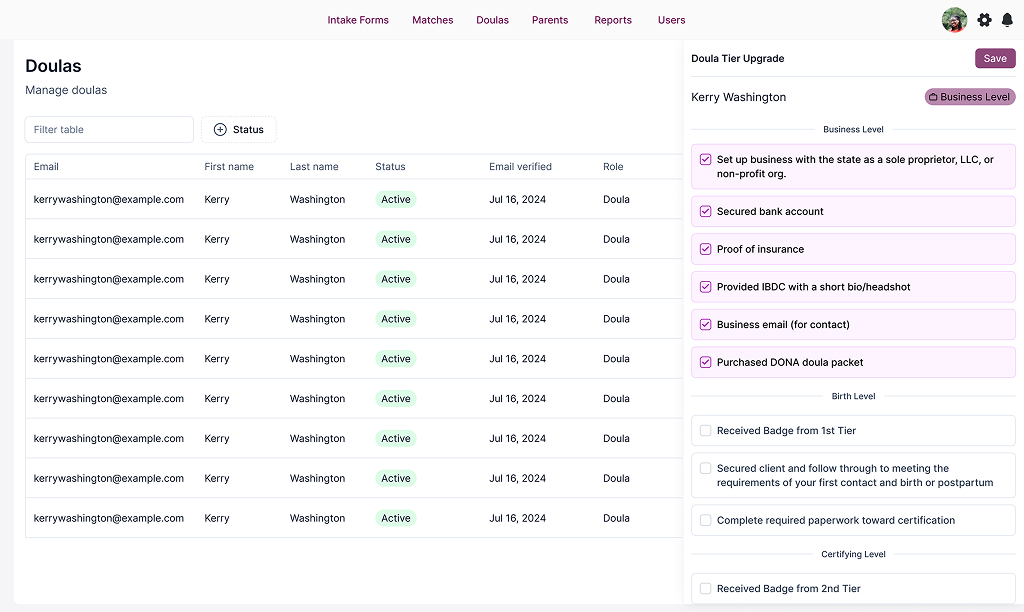
Achievement badges and certifications for trust-building
Simplified client management dashboard
Achievement badges and certifications for trust-building
Admin Features
User management and access controls
Custom form creation and data collection
System configuration and optimization tools
Educational content management and scheduling
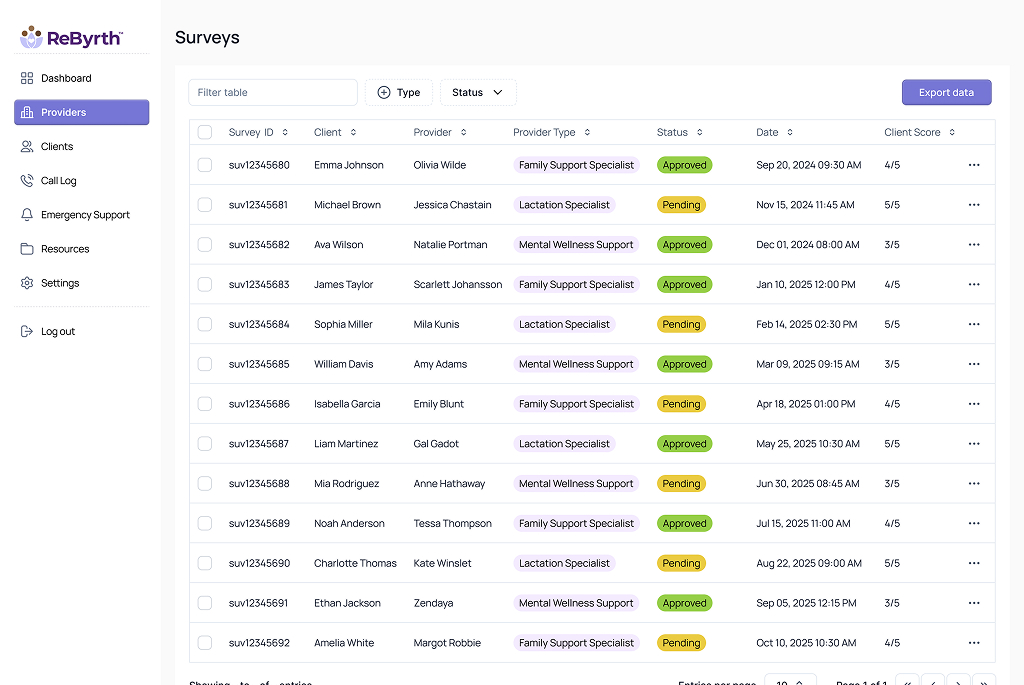
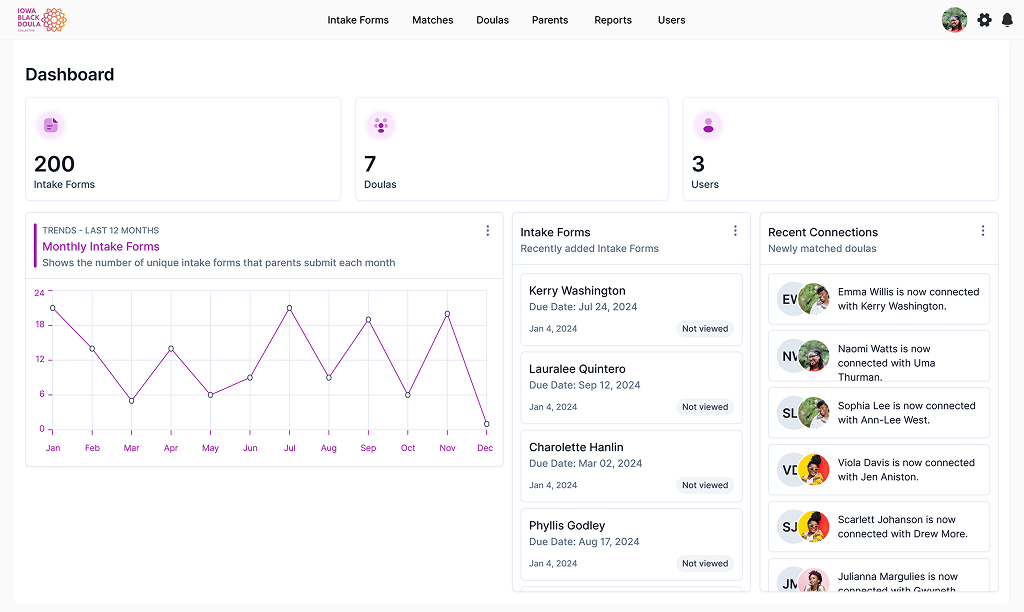
Comprehensive reporting on matching efficiency and service metrics
Technical Implementation
Architecture & Development Approach
The platform was built with a user-centric, scalable architecture designed to support the IBDC’s growth:
Client Intake Form
Intuitive web application for families to register, receive matches, and access resources
Tools for managing client information, tracking engagement, and viewing performance metrics
Admin Console
Management interface for the IBDC team to configure matching criteria, manage content, and monitor system performance
Backend Infrastructure
Reliable API layer with role-based access control to ensure data security and proper user permissions
Automated Workflows
Intelligent matching algorithm and email automation for consistent, timely content delivery
All data was protected through secure encryption, with regular backups and user access logging to maintain data integrity.
Intelligent Matching System
The core innovation of DoulaConnect is the custom matching system that analyzes family preferences, doula specializations, and availability to create optimal pairings in under 30 minutes a 90+% reduction from the previous 48-hour manual process.
Key Success and Impact
90%+ Reduction In Matching Time
Matching time decreased from 48+ hours to under 30 minutes, representing a 90+% improvement in efficiency. This immediate support was critical during the pregnancy journey and significantly improved user satisfaction.
Empowerment of Non-Technical Team
Despite lacking an in-house tech team, the IBDC was equipped with knowledge and tools to manage the platform independently. Through collaborative design, training, and support, the team felt confident making decisions and optimizing the system.
Streamlined Operations
Automation reduced manual workload and errors, allowing doulas to redirect their focus toward providing quality care rather than administrative tasks.
Scalable Growth
The IBDC can now handle significantly higher client volume without overextending resources or compromising service quality.
Consistent Educational Delivery
100% of families now receive educational materials promptly via automated email, creating a reliable information dissemination system aligned with the IBDC's mission.
Key Insights
As DoulaConnect took shape through research, design, and collaborative development, several core insights emerged that guided the project’s success:
Technology Serves Mission, Not the Reverse
By prioritizing the IBDC's mission of culturally grounded, evidence-based care, the platform became a tool that enhanced rather than constrained their work. Technology was designed around their needs, not imposed upon them.
Speed Unlocks Scalability
The dramatic efficiency gain wasn't just a metric it fundamentally changed what the organization could do. By eliminating the 48-hour bottleneck, the IBDC could serve more families without expanding their team, proving that operational efficiency directly enables mission expansion.
Partnering Builds Ownership
Working closely with the IBDC at every stage from design walkthroughs to post-launch training, transformed them from users of a platform into informed stewards of it. Non-technical teams empowered with knowledge become confident advocates and effective managers.
Accessibility Matters at Every Level:
From intuitive form design for families to clear dashboards for administrators, accessibility wasn't an afterthought but a core design principle. When platforms are easy to use, adoption accelerates and impact multiplies.