
ReByrth: Maternal Health Telehealth Platform Case Study
Building a HIPAA-Compliant Platform Connecting Families with Specialized Perinatal Care

Company
Urban Baby Beginnings
Business Type
Nonprofit Organization
Team
2 Designers, 3 Developers, 1 Project Manager
Time
10 Months
Problem
In underserved areas, pregnant and postpartum individuals wait weeks for specialist appointments, leaving urgent needs, from breastfeeding challenges to postpartum depression, unaddressed. Geographic barriers and limited provider availability create dangerous care gaps during the most vulnerable periods of maternal health.
Solution
Design Process
Goals
The Rebyrth platform was designed to provide comprehensive support for pregnant and postpartum individuals by connecting them with specialized care providers. The primary objectives included:
Facilitating real-time support through video and voice calls
Offering access to a variety of specialists for different support types
Providing a centralized resource center for education and resource sharing
Ensuring emergency support services are easily accessible
Building a scalable platform for comprehensive care management for users and providers alike
Meeting strict HIPAA compliance requirements for protected health information (PHI)
Challenge
The development of ReByrth came with several challenges, including:
Integrating real-time communication systems that were reliable, scalable, and HIPAA-compliant
Addressing diverse user needs across support types, including family support, lactation, mental wellness, and emergency services
Ensuring multi-language support and accessibility for a global audience
Creating role-based user management with specific features for clients, providers, and administrators
Establishing robust quality assurance systems for continuous improvement
Meeting healthcare compliance requirements to protect sensitive patient data and maintain industry standards
Research
The research phase involved understanding the needs of pregnant and postpartum individuals as well as healthcare providers. User interviews and workshops informed the development process and clarified requirements for communication, support, and resource sharing.
Findings
Clients prioritize ease of registration and quick access to care
Providers need tools for efficient client queue management and resource sharing
Healthcare organizations require robust security and compliance assurance for patient data
Administrators require analytics and feedback tools for performance monitoring and quality assurance
Prototyping & Wireframing
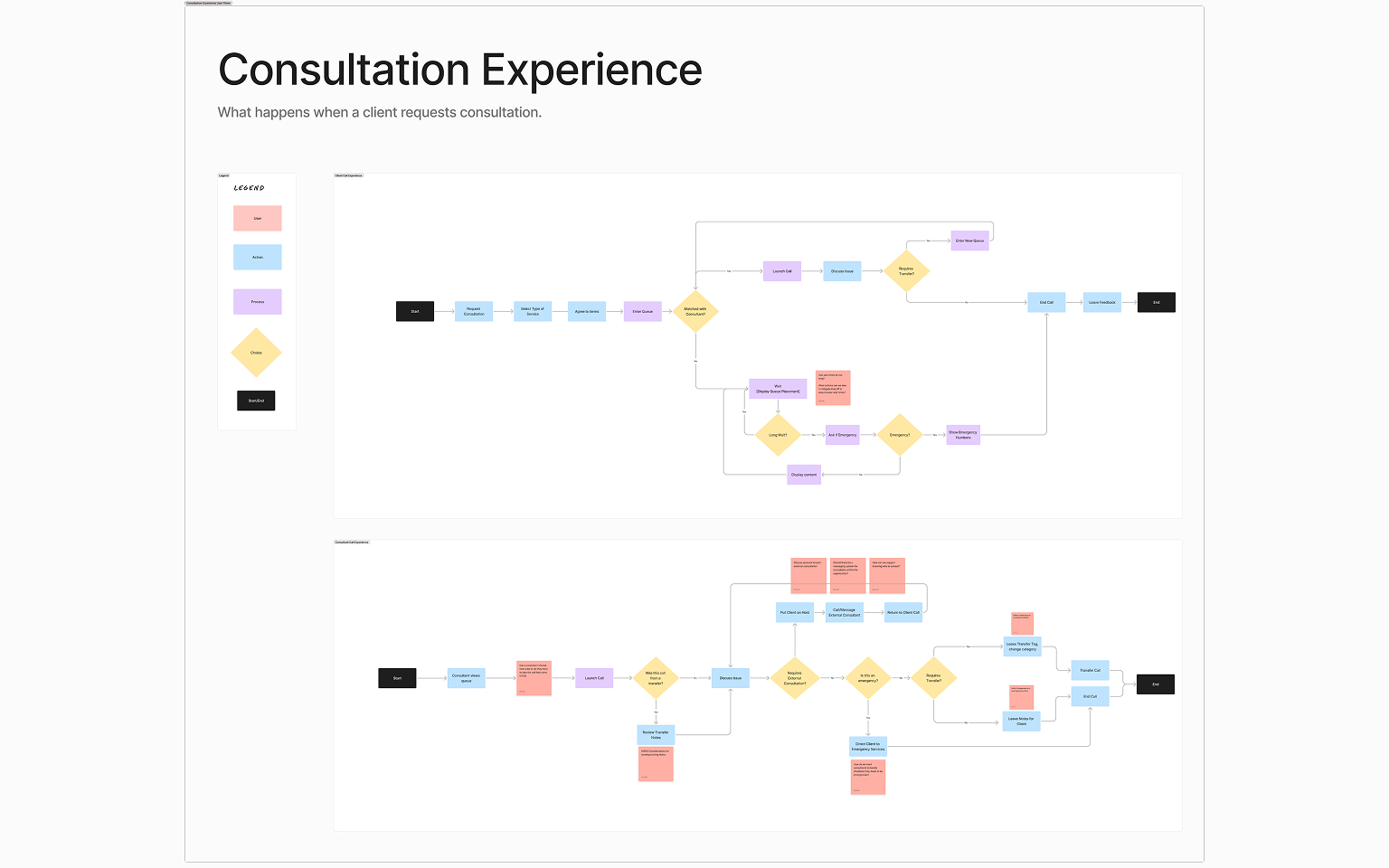
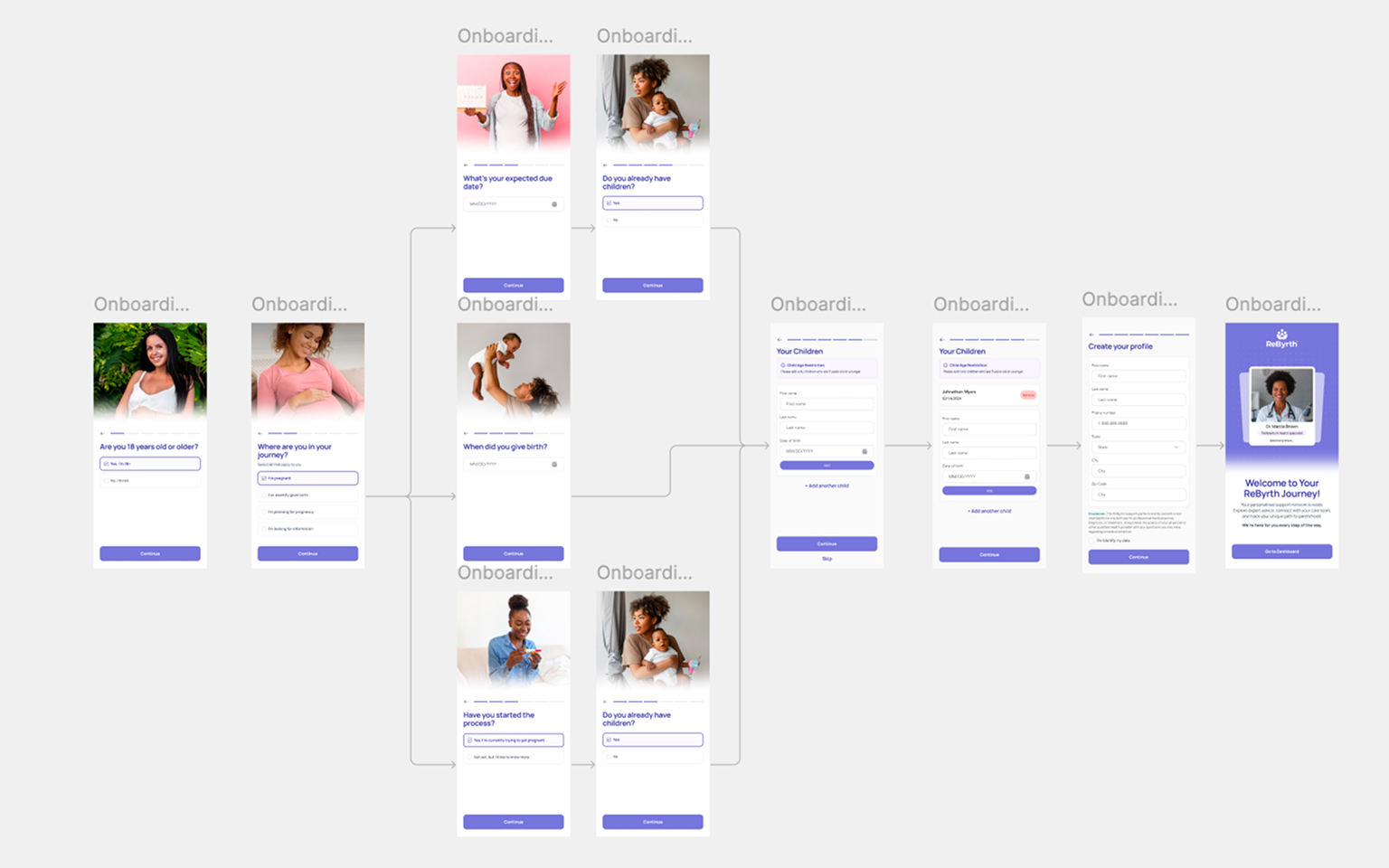
Low-fidelity mockups and wireframes were created to visualize workflows for real-time communication, user management, and resource access. These prototypes underwent usability testing to validate design assumptions, with particular attention to ensuring that compliance requirements didn’t compromise user experience.
Iterative Process
Feedback from stakeholders and users informed iterative refinements, including:
Streamlining the onboarding process for clients while maintaining compliance verification
Enhancing analytics tools for real-time support visibility
Simplifying the layout of the resource center for better accessibility
Optimizing the integration of Stream's communication features for an intuitive user experience
Final Design
Client Features
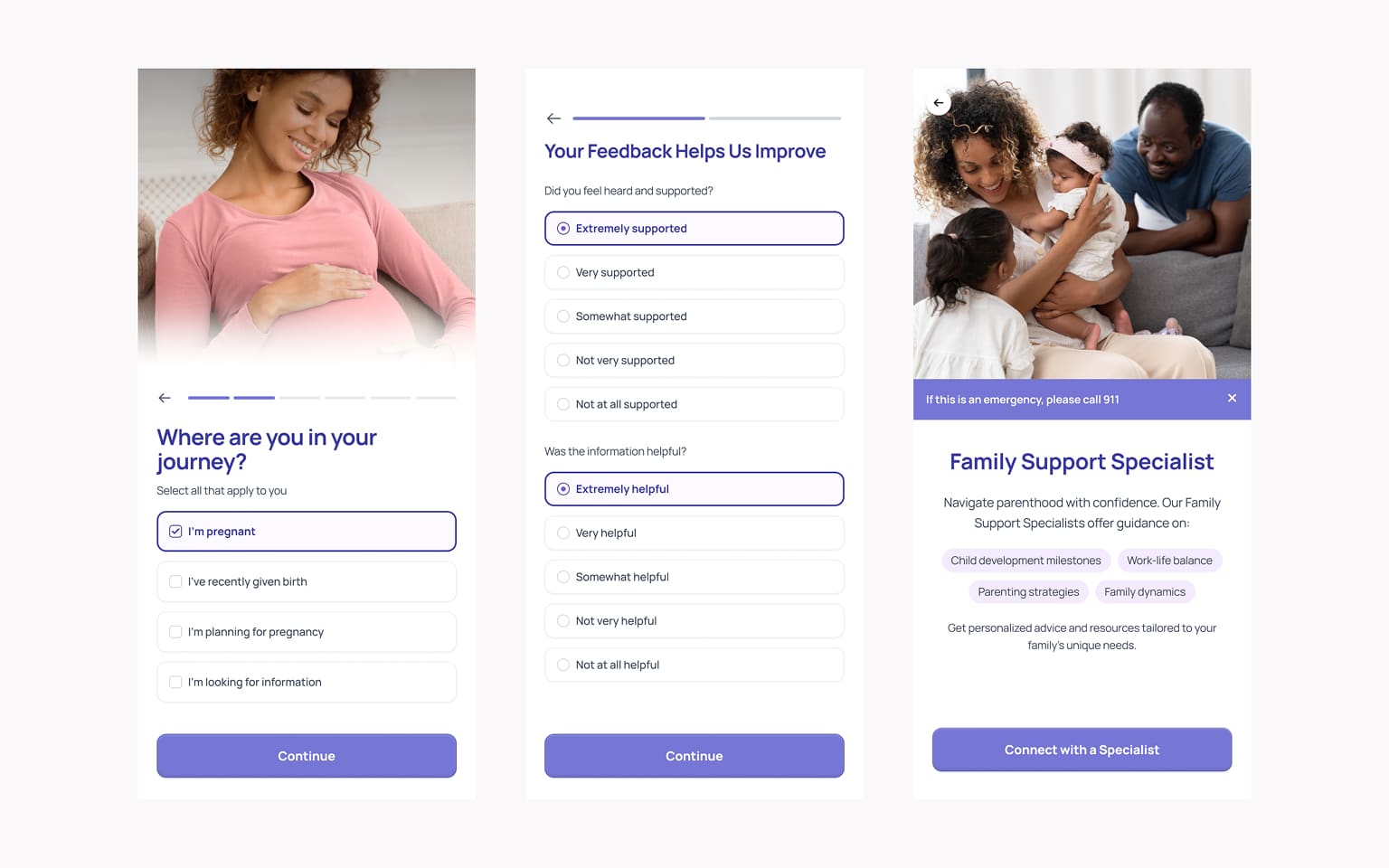
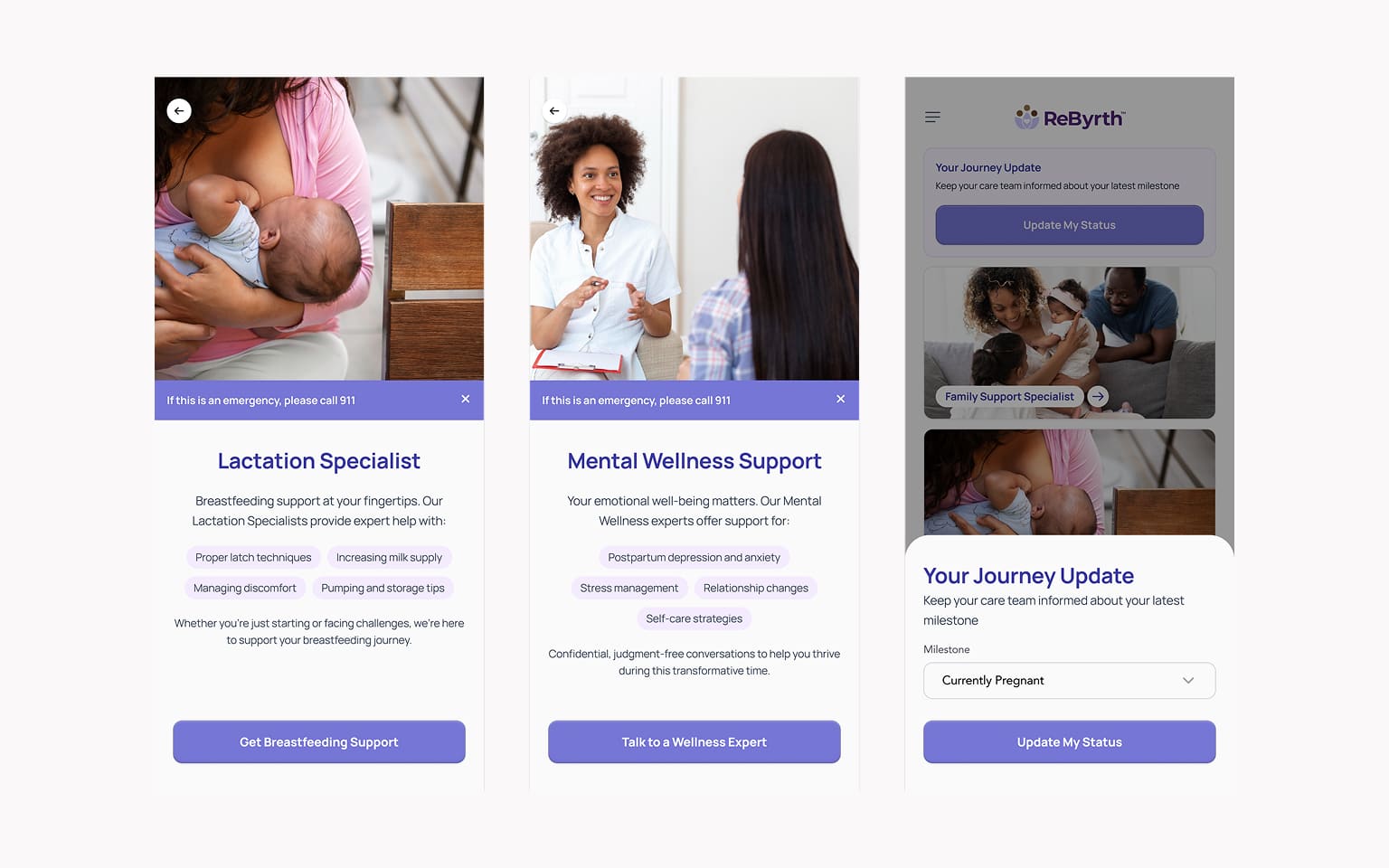
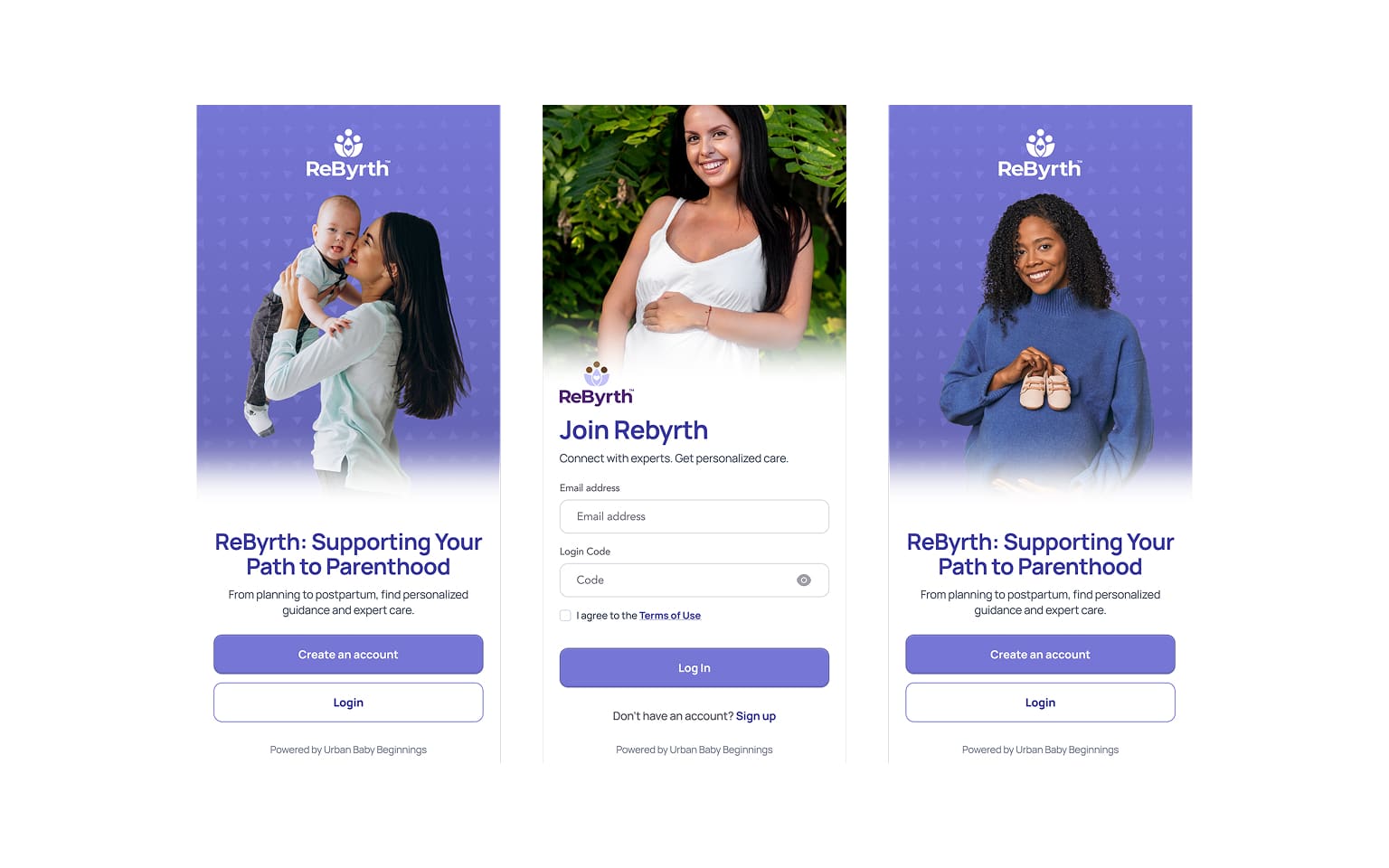
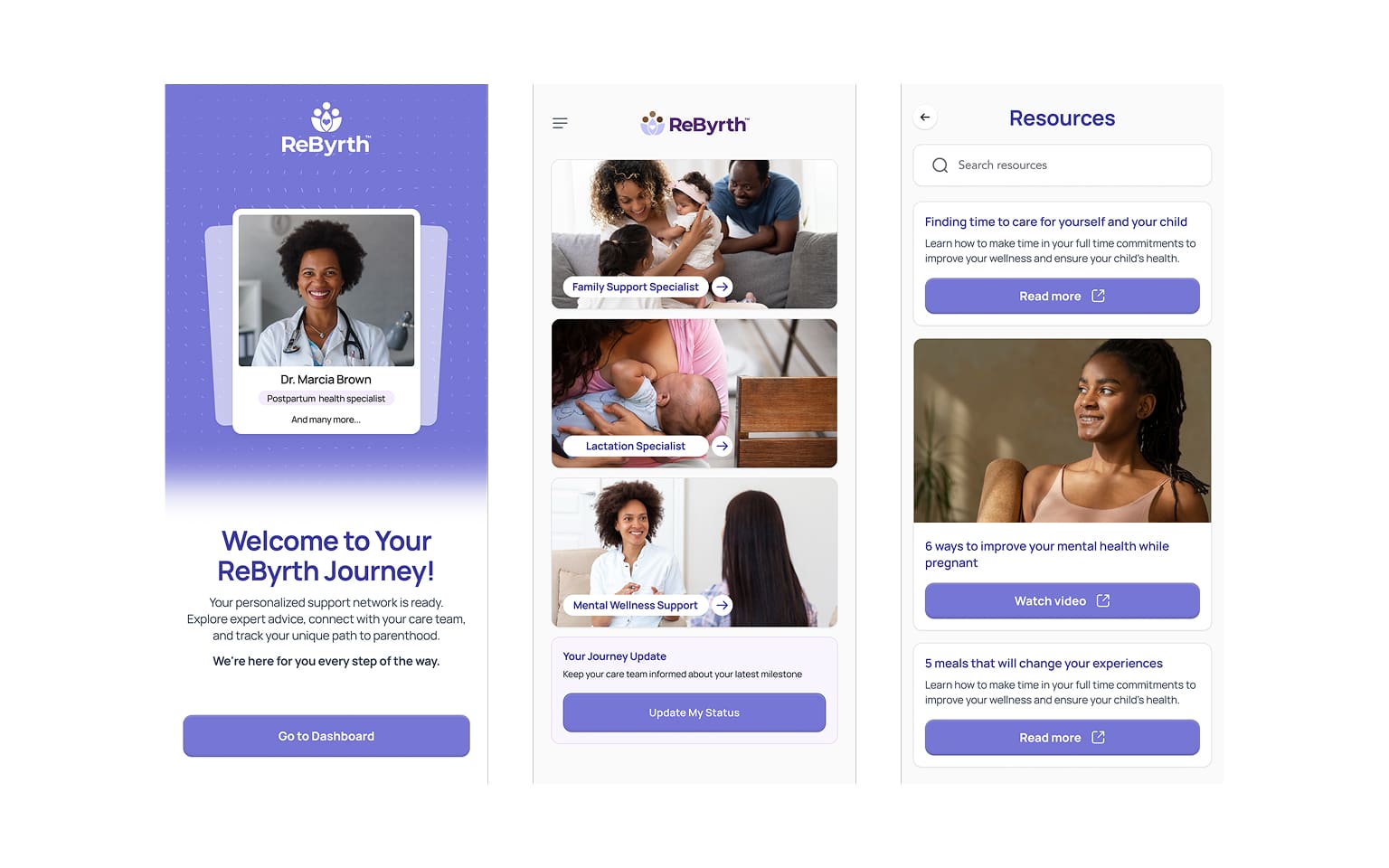
Easy registration and support type selection
Access to educational materials and feedback submission
Emergency support tools with priority routing
Real-time connection to providers via secure video and voice calls (powered by Stream)
In-app messaging for ongoing communication with specialists
Provider Features
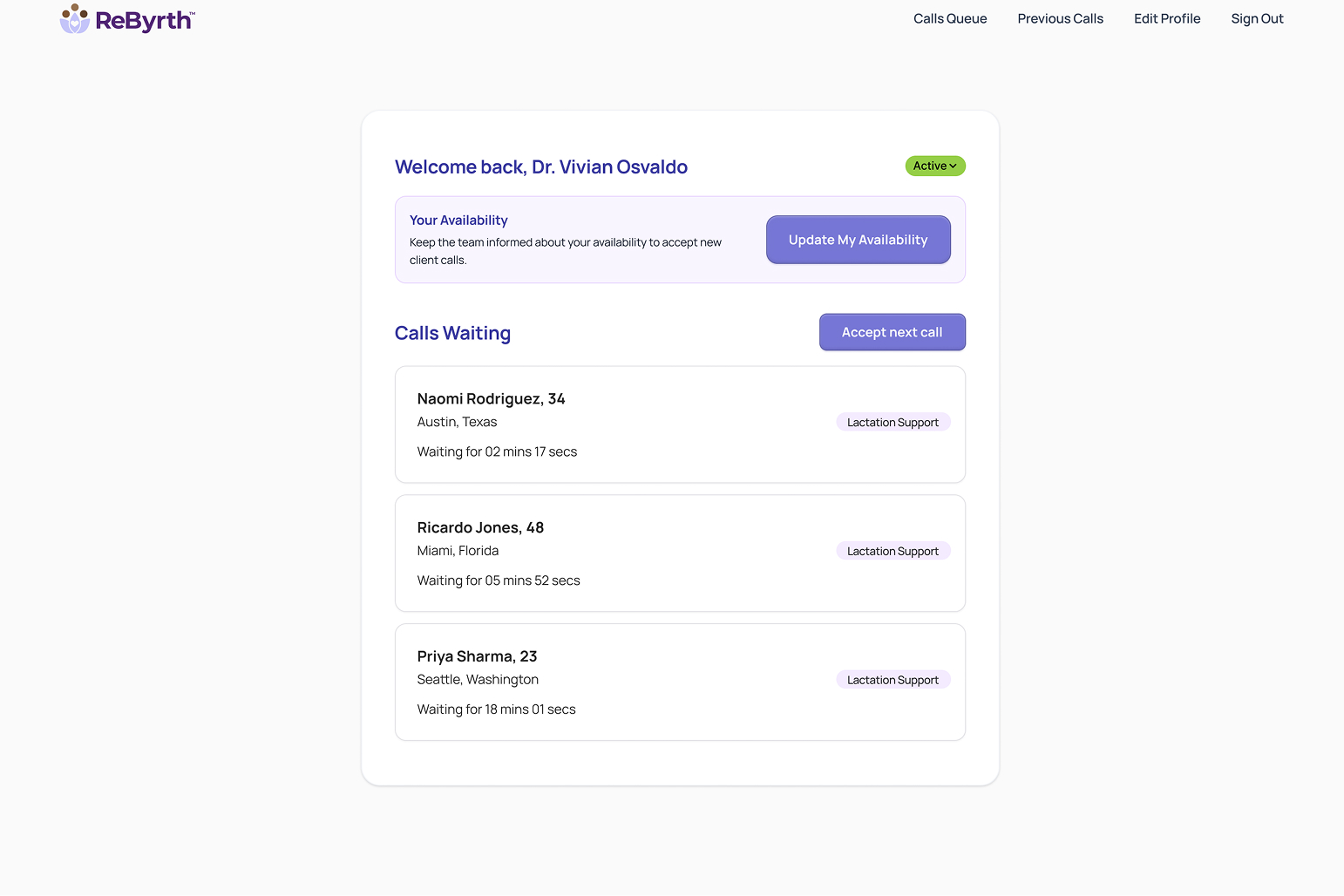
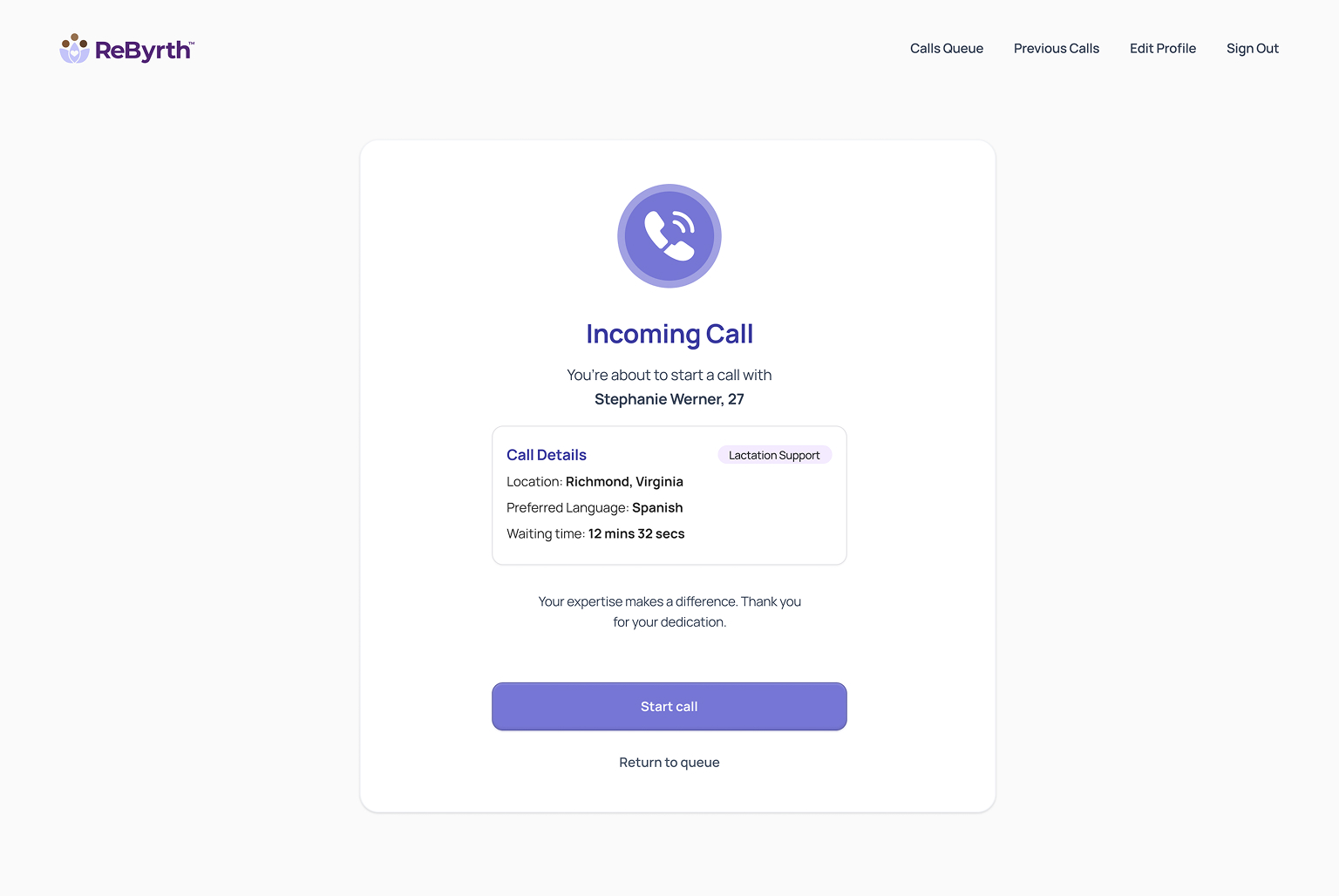
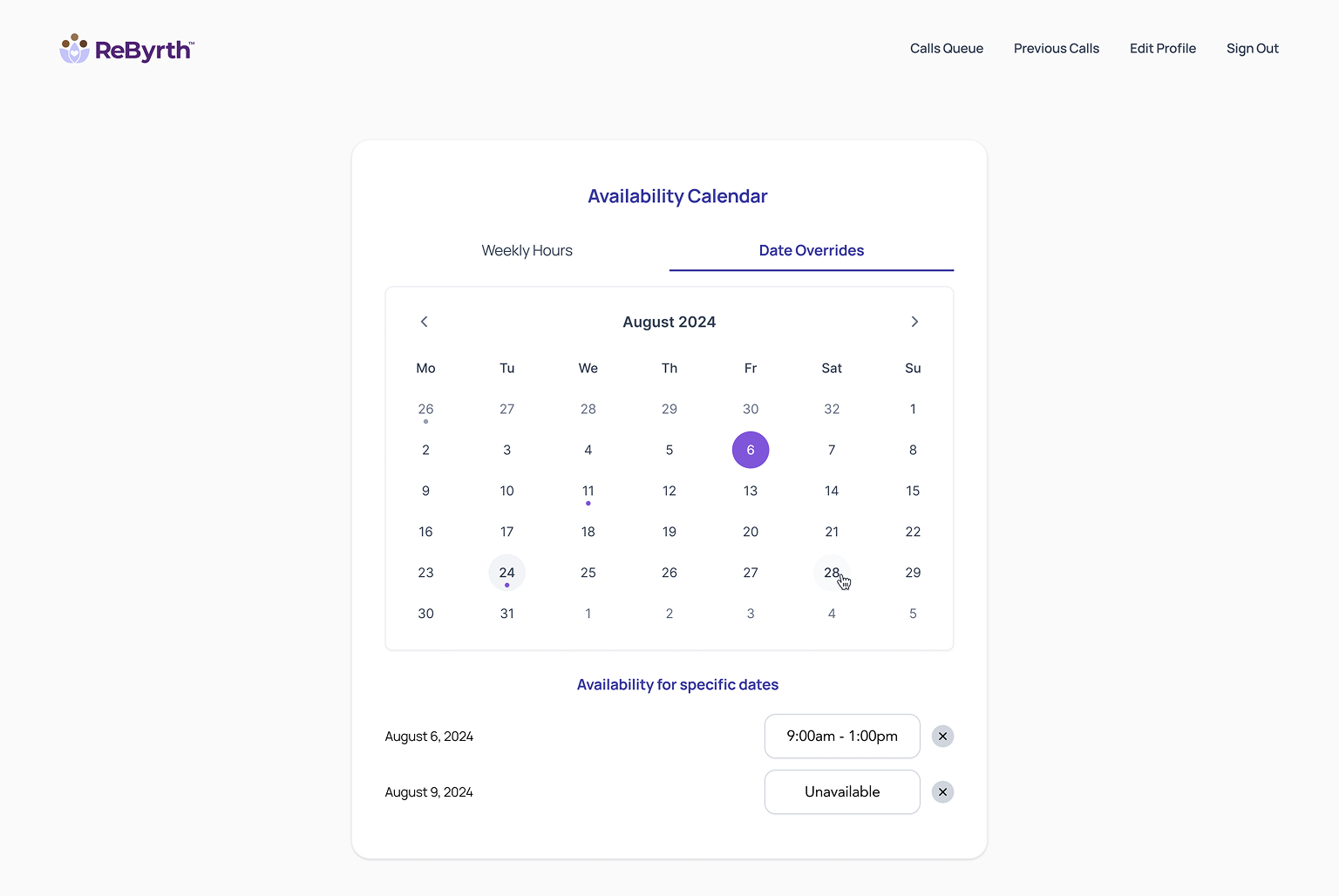
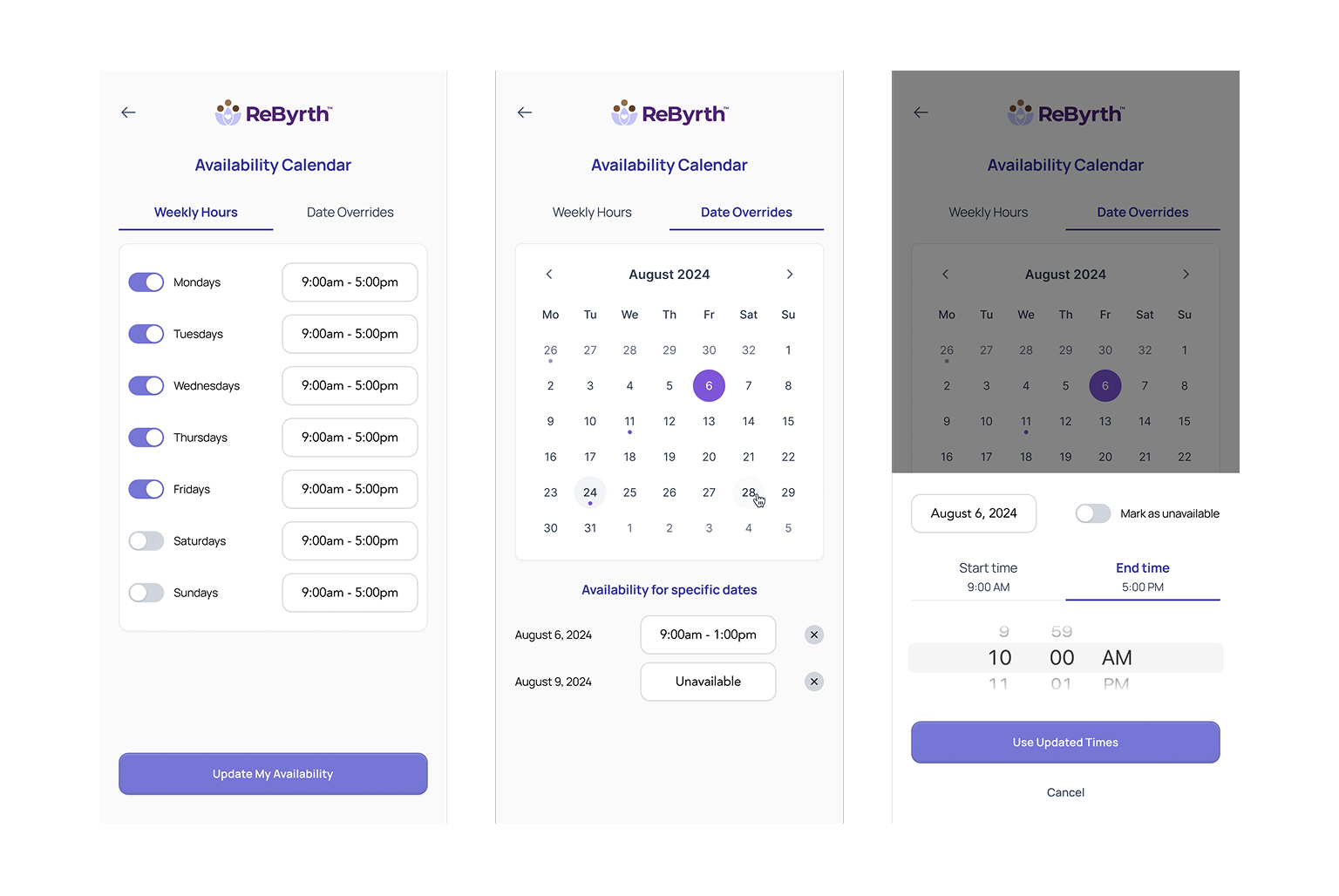
Specialized dashboards for managing client queues and sharing resources
Secure call handling tools with integrated performance tracking
Resource library for sharing educational materials
In-app messaging for direct client communication
Admin Features
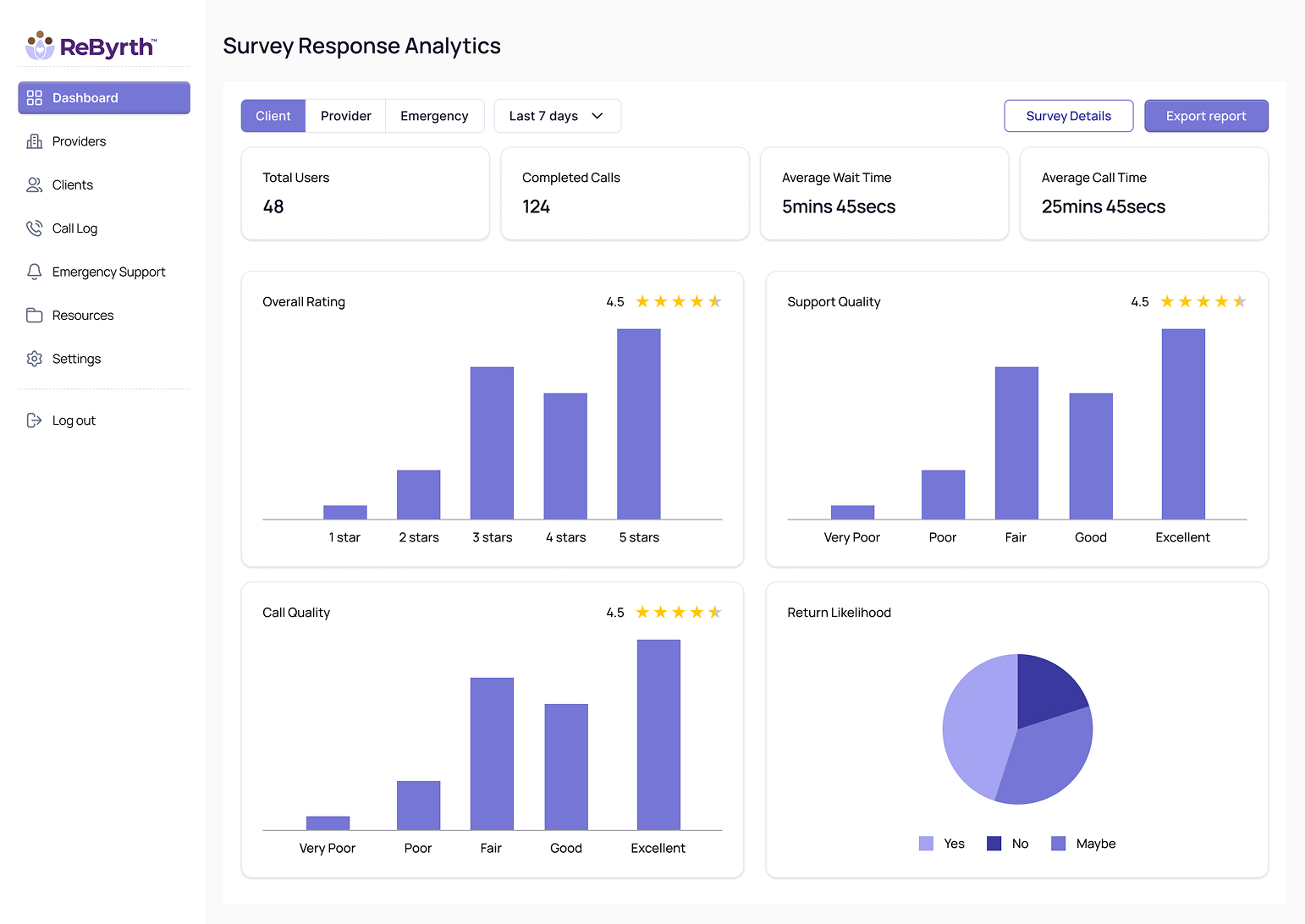
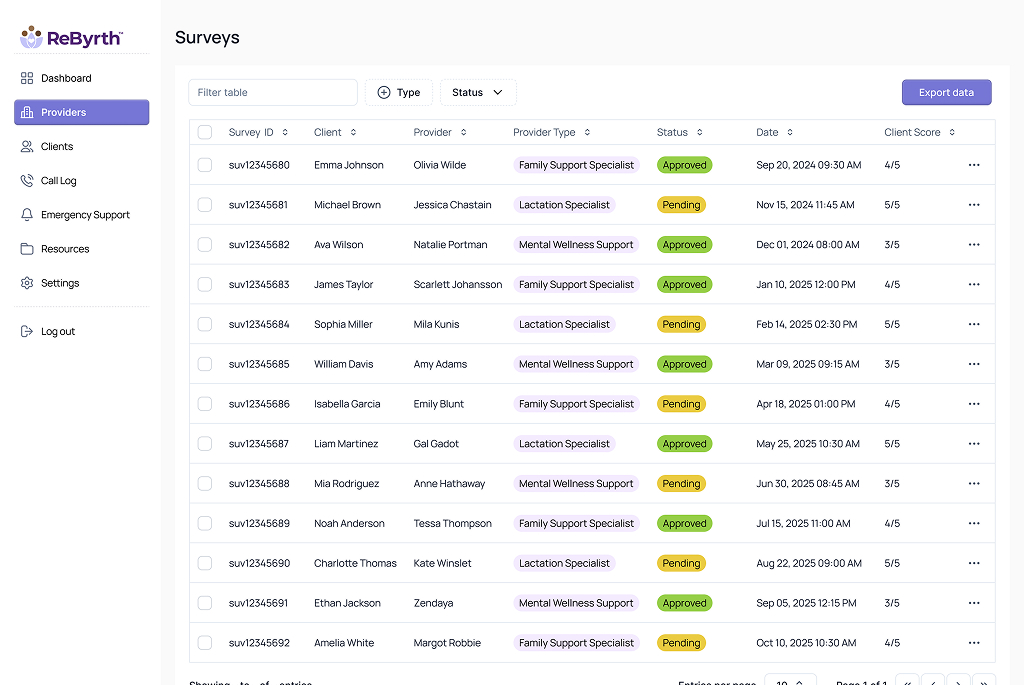
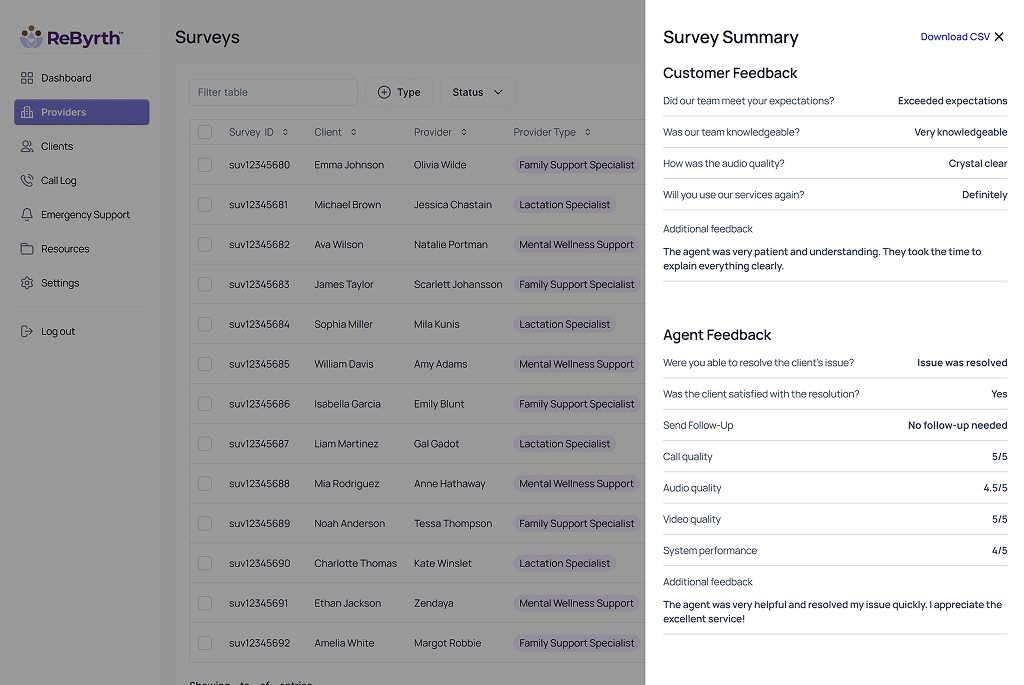
Comprehensive dashboards for managing user accounts and provider groups
Configuration tools for support types and resource categories
Compliance and audit logging tools for regulatory oversight
Analytics and reporting for quality assurance and system optimization
Technical Implementation
HIPAA Compliant Architecture
From the outset, Rebyrth was built with healthcare compliance at its foundation. All components of the platform were designed to meet HIPAA standards, requiring careful attention to data encryption, access controls, secure messaging, and audit logging. This compliance requirement influenced every architectural decision, from data storage to third-party integrations.
Real-Time Communication with Stream
PHI-Ready Security
Industry-leading encryption and security protocols designed to protect sensitive health information
HIPAA Compliance
Full HIPAA readiness with Business Associate Agreement (BAA) support, ensuring all patient communications remain protected
SOC2 Type II & ISO 27001 Certification
Demonstrating enterprise-grade security practices and compliance standards
In-app Messaging and Video
Streamlined communication capabilities that allow clients to connect with specialists through secure video calls, voice calls, and integrated messaging
The integration of Stream allowed the development team to leverage a pre-built, compliant communication infrastructure rather than building proprietary systems from scratch. This approach reduced development time while guaranteeing that all real-time communications from initial consultations to follow-up support met the highest security and privacy standards.
Architecture & Development Approach
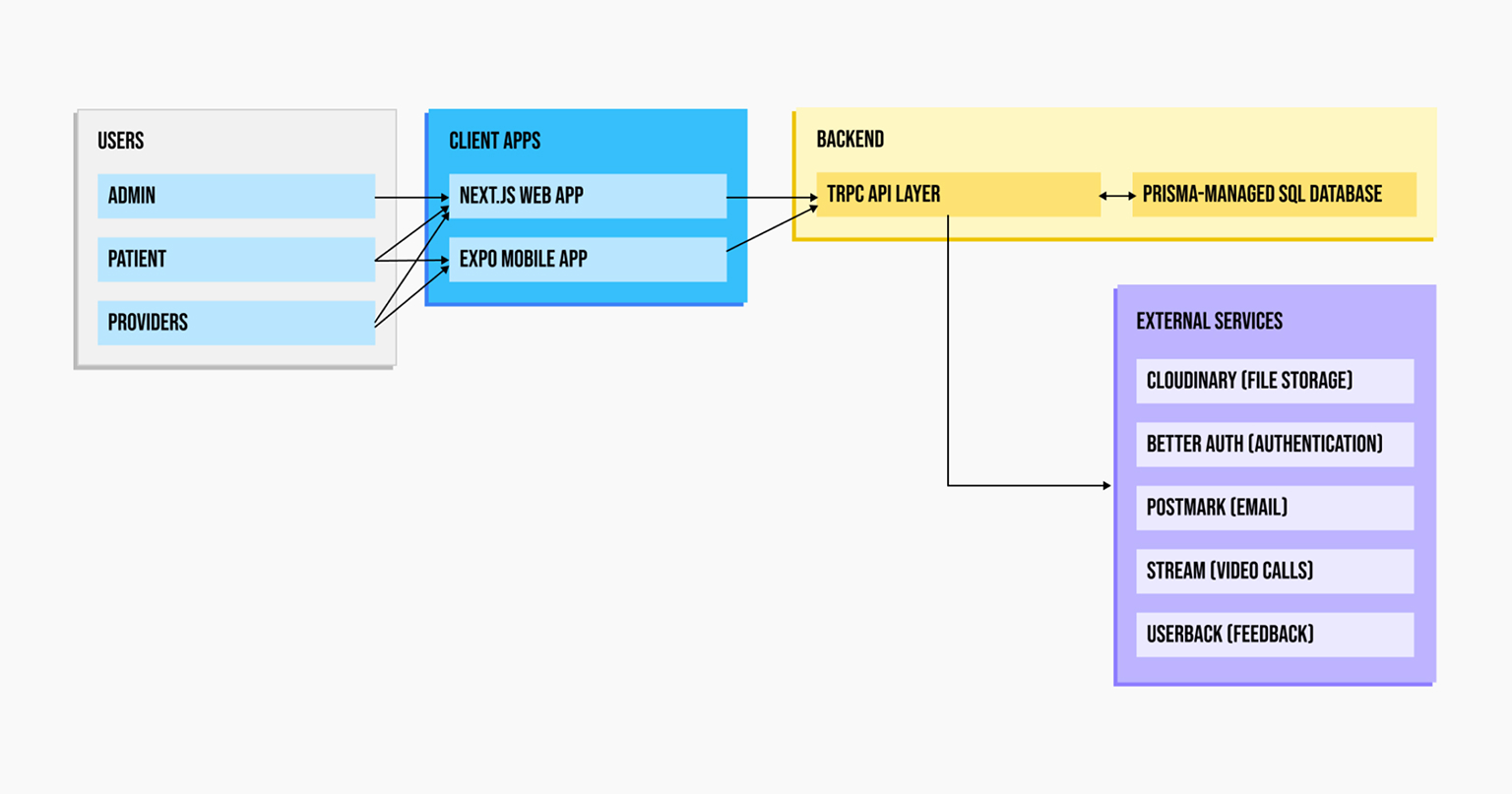
Client-Facing Layer
Mobile and web applications providing pregnant and postpartum individuals seamless access to specialists
Provider Dashboard
Specialized tools for care providers to manage client queues, share resources, and track performance metrics
Communication Layer
Stream integration handling all HIPAA-compliant video, voice, and messaging services with end-to-end encryption
Admin Console
Comprehensive management interface for system administrators to configure support types, manage user accounts, and monitor analytics
Backend Infrastructure
Secure API layer with role-based access control (RBAC) to enforce data isolation and ensure only authorized users can access patient information
All data transmission was encrypted both in transit and at rest, with comprehensive audit logging to track system access and data usage.
Outcomes & Achievement
Our Team successfully delivered a platform that includes:
Multi-role platform
Mobile + web for clients, providers, admins
Secure video + voice
Real-time calls powered by Stream
Multilingual resource hub
Centralized content + language support
QA + performance insights
Post-call surveys + analytics dashboards
Role-based access control
Permissions designed for diverse users
Security & compliance posture
HIPAA-aligned; SOC 2 / ISO 27001-ready standards
Key Insights
As Rebyrth took shape through research, refinement, and user feedback, several core insights emerged. These lessons informed not only the platform’s final features but also its guiding principles moving forward. From ensuring user-centered design to maintaining flexibility for future growth, the following insights reveal how Rebyrth achieved a more accessible, effective, and meaningful care experience.
Compliance Enables Trust
By building HIPAA compliance into every layer of the platform from day one, Rebyrth created a foundation of trust for both patients and healthcare providers, making adoption faster and smoother.
Speed Unlocks Scalability
Partnering with Stream, a platform purpose-built for healthcare communication, proved far more efficient than developing proprietary compliance infrastructure, allowing the team to focus on user experience while ensuring security standards were met.
Security Shouldn't Compromise Experience
The final platform demonstrates that robust healthcare compliance and exceptional user experience aren't mutually exclusive. Careful architecture and thoughtful design can achieve both simultaneously.
User-Centered Design Drives Adoption
Early research and prototyping ensured that the platform's features met the diverse needs of clients, providers, and administrators. By validating design assumptions with real users before development, the team built a platform that felt intuitive and essential rather than imposed, resulting in stronger user engagement and faster organizational adoption.